
目次
“ALPACA — Living alonside the People of the Andes” at Tokyo, Japan
Exhibition Concept
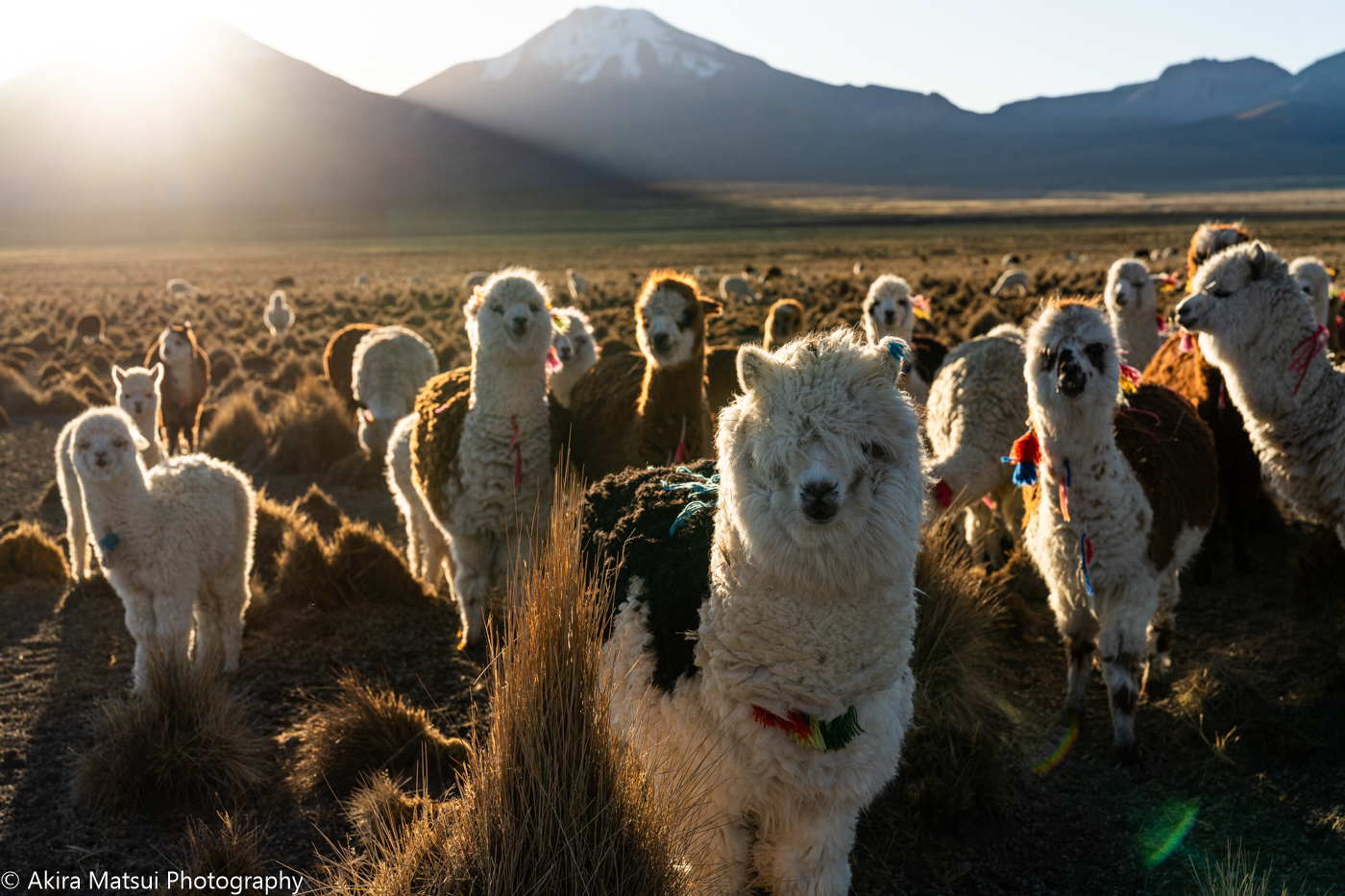
At the foothills of the South American Andes, alpacas live across vast highland plains. For thousands of years, they have shared this land with people. Alpacas and llamas are not only practical animals valued for their wool and as beasts of burden; for the people of the Andes, they are also considered members of the family and play an important spiritual role, connecting humans and the divine.
In this exhibition, alpacas are not portrayed merely as livestock. Instead, they are photographed as beings who have lived alongside people within a shared cultural landscape.
Through windswept plateaus, scenes of grazing, and the gaze of a single alpaca standing within a herd, this body of work reveals the harsh yet abundant natural environment of the Andes and the everyday lives shaped within it. From these moments emerges the true presence of the alpaca.
Exhibition Information
Akira Matsui Photo Exhibition “ALPACA — Living with the People of the Andes”
Dates
April 17 (Fri) – April 23 (Thu), 2026
Opening Hours
Weekdays: 10:30 a.m. – 7:00 p.m.
Weekends: 11:00 a.m. – 5:00 p.m.
Last day closes at 2:00 p.m.
Venue
Fuji Photo Gallery Ginza
Success Ginza First Building 4F
1-2-4 Ginza, Chuo-ku, Tokyo 104-0061, Japan
Gallery Website
https://www.prolab-create.jp/gallery/ginza/
Gallery Talk in japanese
The artist will be present at the gallery throughout the exhibition period.
On the dates listed below, Akira Matsui will give gallery talks, offering insight into the works on display.
Gallery Talk in Japanese
Dates
April 18 (Sat), 19 (Sun), and 22 (Wed)
Two sessions each day
Times
* 11:30–12:00
* 14:30–15:00
During these talks, the artist will discuss the ecology of alpacas, as well as the landscapes and lives of the indigenous people who live alongside them in the Andes.
Photo Book Created for the Exhibition “ALPACA”
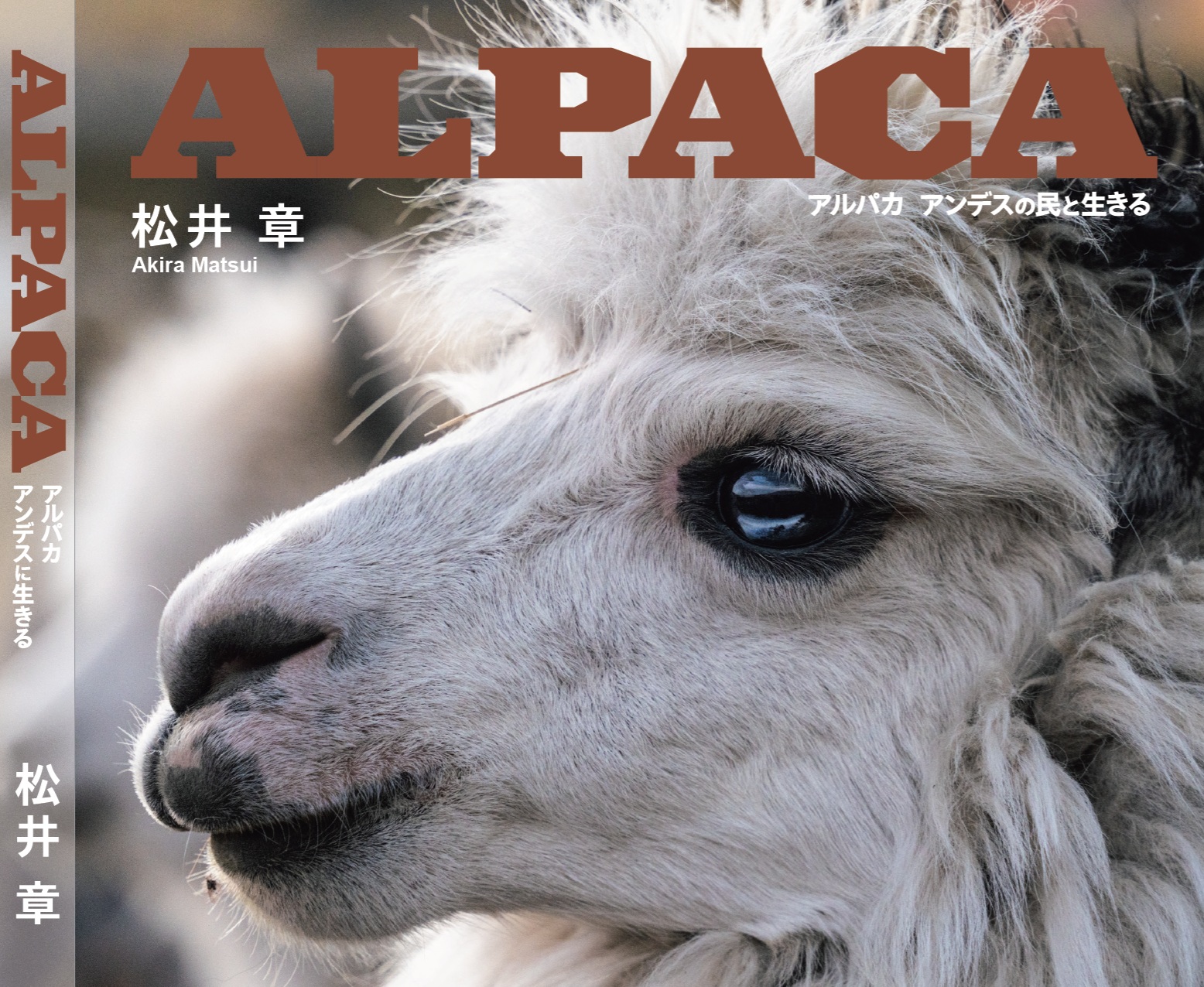
To coincide with this exhibition, a new photo book titled ALPACA has been published.
While sharing the same subject, the book is edited differently from the exhibition, bringing together photographs of alpacas, the people who live with them, and the vast mountain landscapes of the Andes. The book offers another way to experience the project beyond the gallery space.
★For more information, please visit the link below →
Venue & Access
FUJIFILM PHOTO SALON GINZA
(Fuji Photo Gallery Ginza)
Success Ginza First Building 4F
1-2-4 Ginza, Chuo-ku, Tokyo 104-0061, Japan
TEL: +81-3-3538-9822
FAX: +81-3-3567-0039
Nearest Stations
• Kyobashi Station (Tokyo Metro Ginza Line), Exit 3 — 1 min walk
• Ginza-itchome Station (Tokyo Metro Yurakucho Line), Exit 7 — 1 min walk
• Yurakucho Station (JR Lines), Kyobashi Exit — 5 min walk
Media
Español
日本語
AKira Matsui Photography
*AKira Matsui Photography/ https://akiramatsui.jp/
Videos
Short Video-1
Short Video-2
Short Video-3
Related Stories
The Origins of the Alpaca | 6,000 Years of Coexistence in the Andean Highlands
Here is a refined and natural English translation that preserves your tone, depth, and flow:
The name “alpaca” is widely known, but where did they come from, and how did they come to live alongside humans?
Alpacas belong to the camelid family. Their ancestors were born in North America.
About three million years ago, when the Isthmus of Panama formed and connected North and South America, some migrated south. In the Andes Mountains, they adapted to high-altitude environments and evolved into wild species such as the vicuña and the guanaco. Meanwhile, another lineage crossed into Eurasia via the Bering land bridge during the Ice Age, eventually giving rise to the camels we know today.
Humans arrived in South America approximately 14,000 years ago. Some of these early peoples settled in the highlands of the Andes. They were the ancestors of today’s Quechua and Aymara mountain communities. As they adapted to life at high altitude, they domesticated wild camelids between 4,000 and 6,000 years ago.
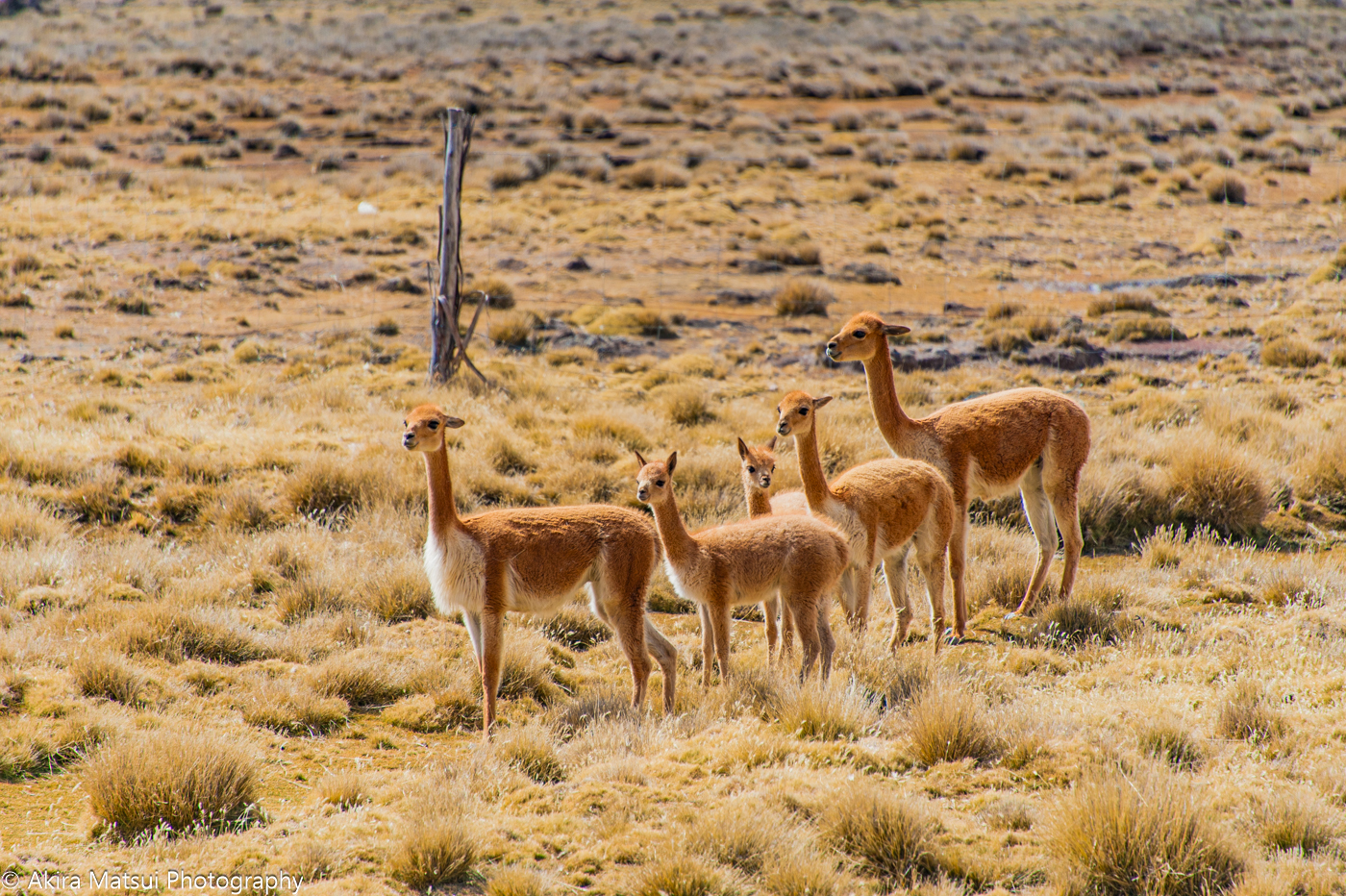
*Vicuña — the ancestor of the alpaca.
Alpacas, primarily descended from the vicuña, were developed through long processes of selective breeding. Adapted to extreme temperature fluctuations in the highlands, their fiber possesses exceptional insulating properties, making it ideal for clothing in harsh climates.
Llamas, another camelid species, are believed to have descended from the guanaco of the lower mountain regions and were domesticated around the same period. Their strength made them indispensable as pack animals, carrying goods and sustaining trade across the rugged Andean terrain.
Over thousands of years, both alpacas and llamas became deeply woven into the cultural and spiritual life of Andean societies. Every part of them—meat, hide, and even dung—served essential purposes in daily life. They also held sacred roles, acting as mediators between humans and the divine. So central were they to Andean cosmology that people saw the form of a llama in the Milky Way, placing them at the heart of their understanding of the universe.
They were never merely livestock. They were family—companions at the very center of everyday life.
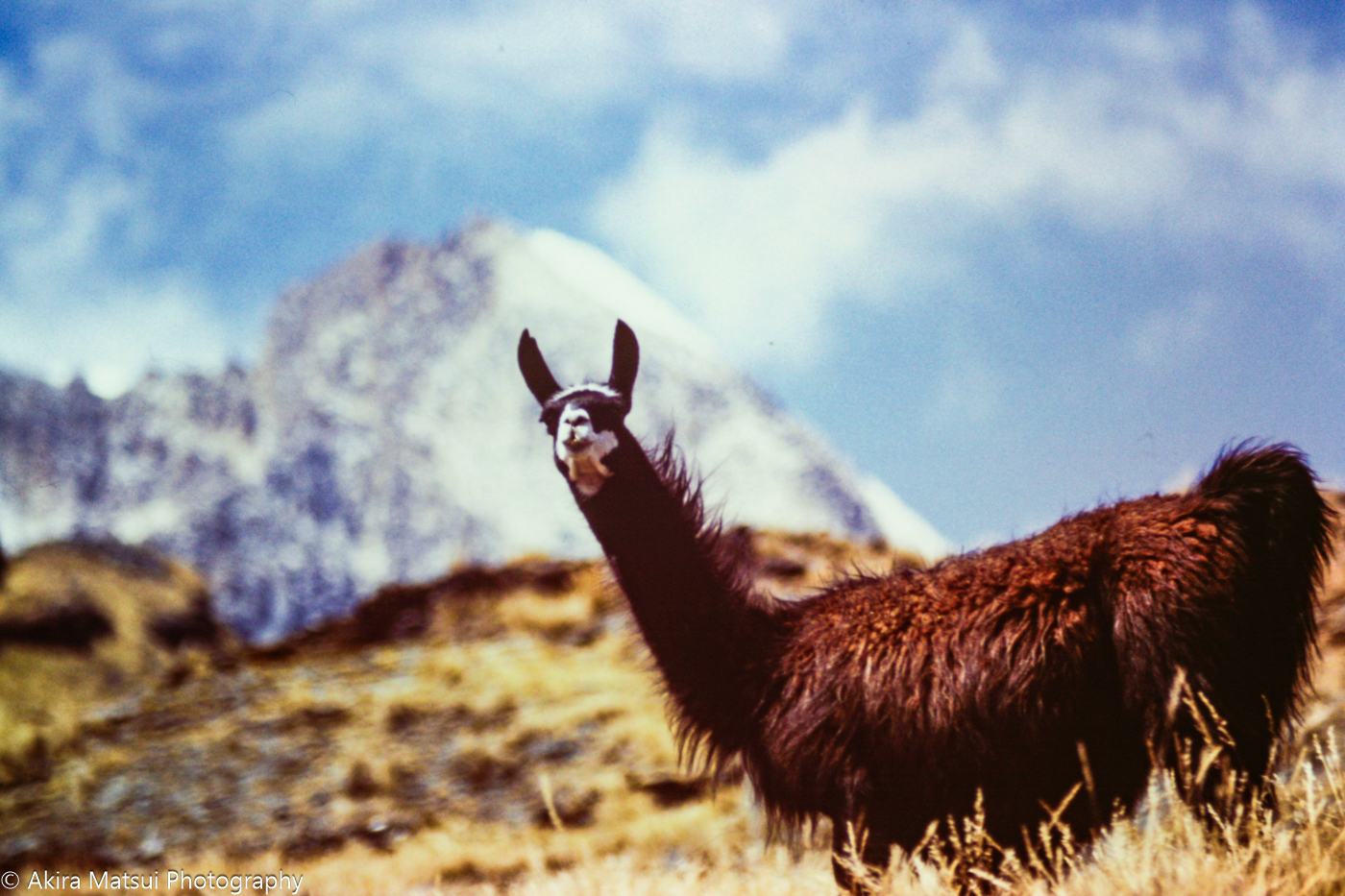
*In the Cordillera Real 30 Years Ago — Llamas and Mount Illampu
I first encountered alpacas and llamas about thirty years ago. I was camping midway up Mount Illampu in Bolivia’s Cordillera Real when I saw them standing on the grassy slopes. In that moment, I felt profoundly that I was in the Andes.
Above the tree line, in the dry season of September, clouds would gather in the afternoon, and light and mist would mingle in a shifting, dreamlike landscape. There, gazing into the distance, stood alpacas and llamas. From time to time, women in traditional dress would appear, gently guiding them across the slopes.
It is a landscape that has likely remained largely unchanged for thousands of years—an Andean scene that endures. Thirty years ago, and still today, the rhythm continues.
Perhaps we are witnessing a landscape that has transcended six millennia. One can only hope that the pastoral traditions of alpacas and llamas—rooted in a long and living cultural heritage—will continue into the future.
Have you ever looked closely at an alpaca’s mouth?
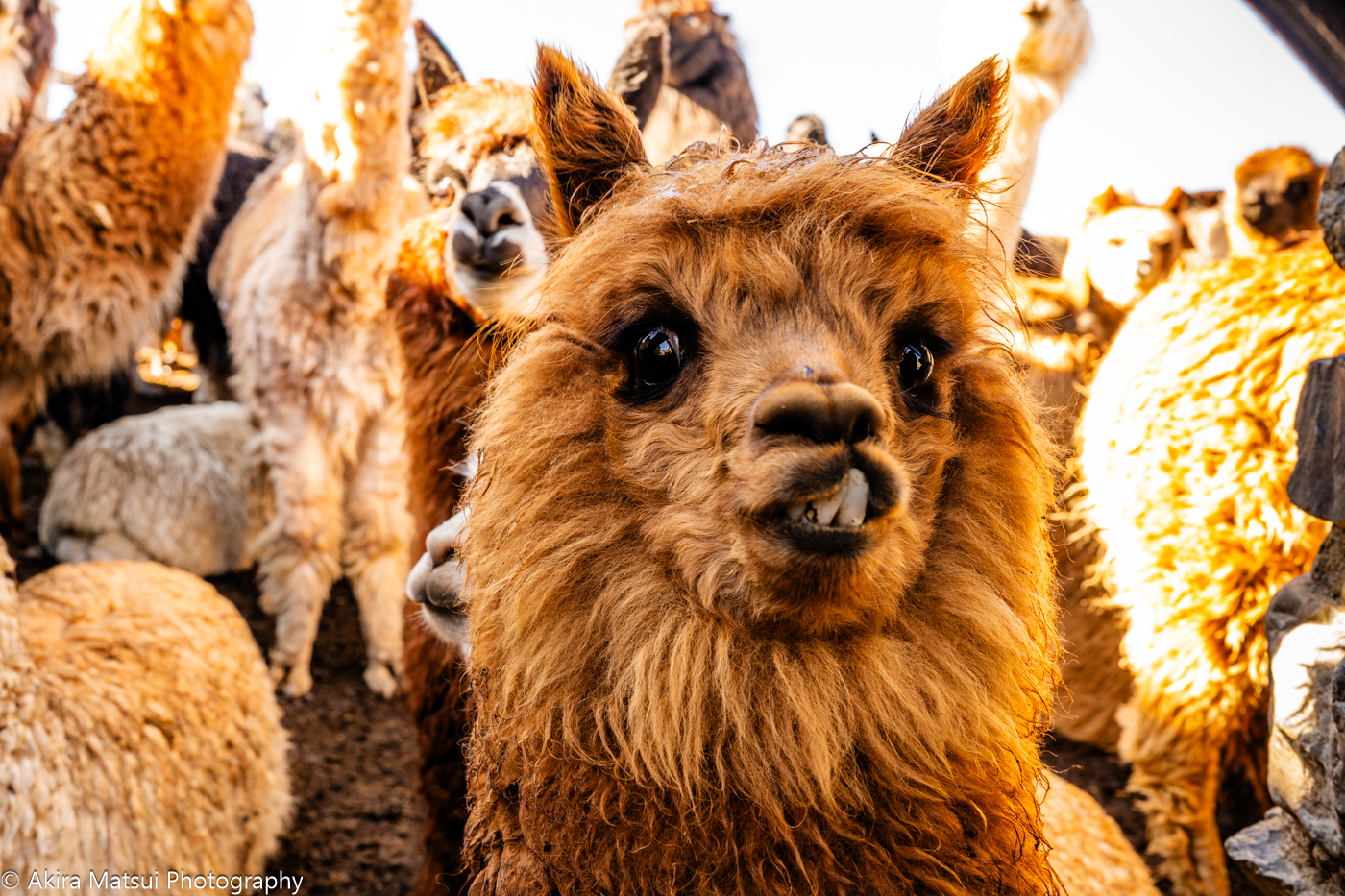
Behind its soft, fluffy coat, an alpaca sometimes lifts its lips, revealing its distinctive teeth.
Alpacas, like other members of the camelid family, are ruminants. Their way of eating is therefore quite unique, and their charming expressions are born from the slow, rhythmic motion of chewing.
When grazing, they first select stems growing close to the ground and nip them off carefully. Their lips, which move almost like fingers, skillfully choose the softer parts of the grass. After swallowing, the grass is brought back up and slowly chewed again with a gentle sideways motion.
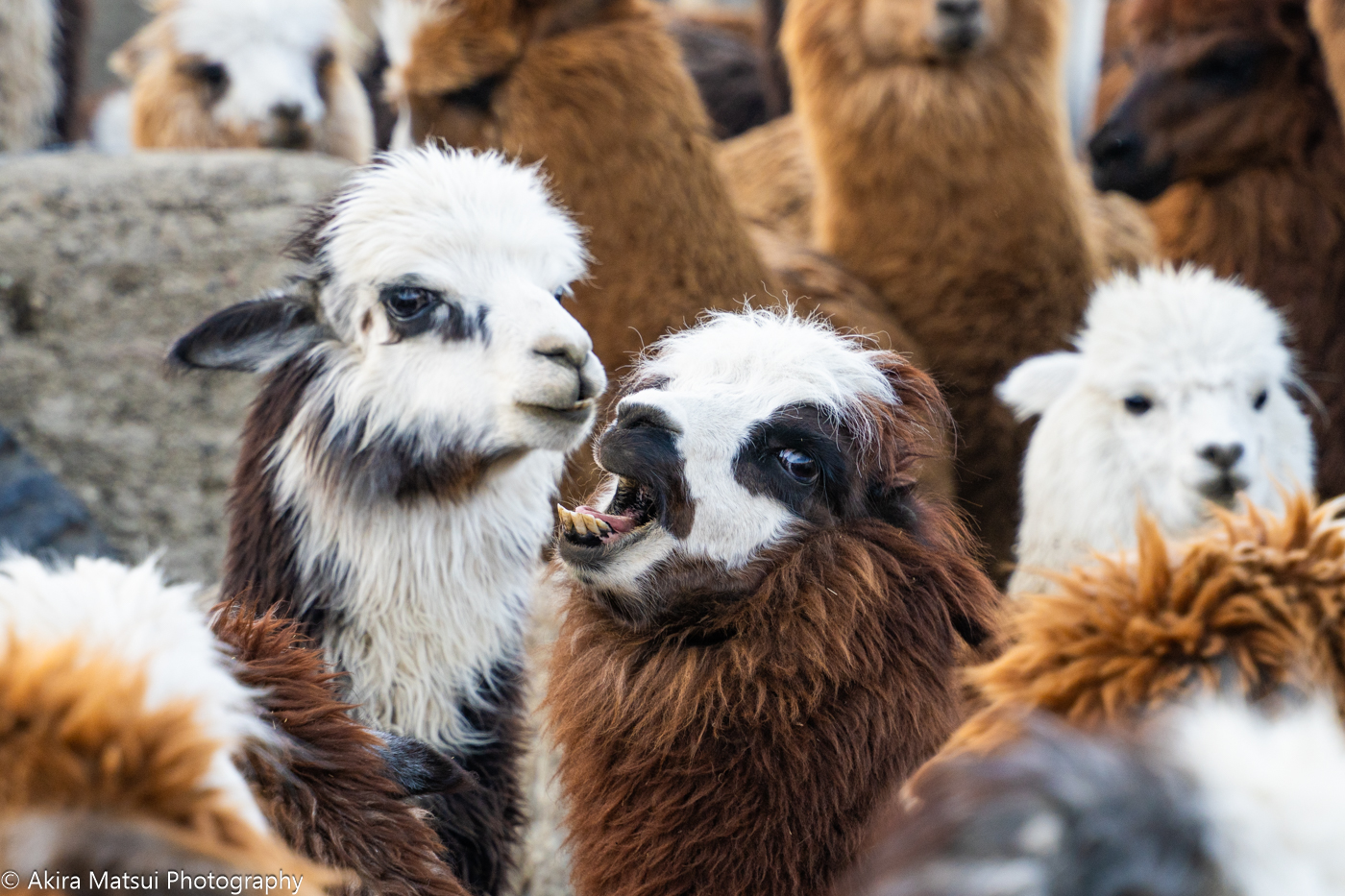
If you observe closely, you will notice that alpacas have no upper front teeth. Only the lower incisors extend forward, while the upper jaw has a hard, gum-like structure known as a dental pad. This feature is shared with llamas, another domesticated animal of the Andes. Using their lower teeth and dental pad, they grasp the grass and trim only the portion above the ground.
On the Andean high plateau—the Altiplano—at around 4,000 meters above sea level, hardy high-altitude grasses such as ichu grow across the landscape. Rainfall is scarce, and the temperature difference between day and night is extreme. In this environment, vegetation does not regenerate quickly.
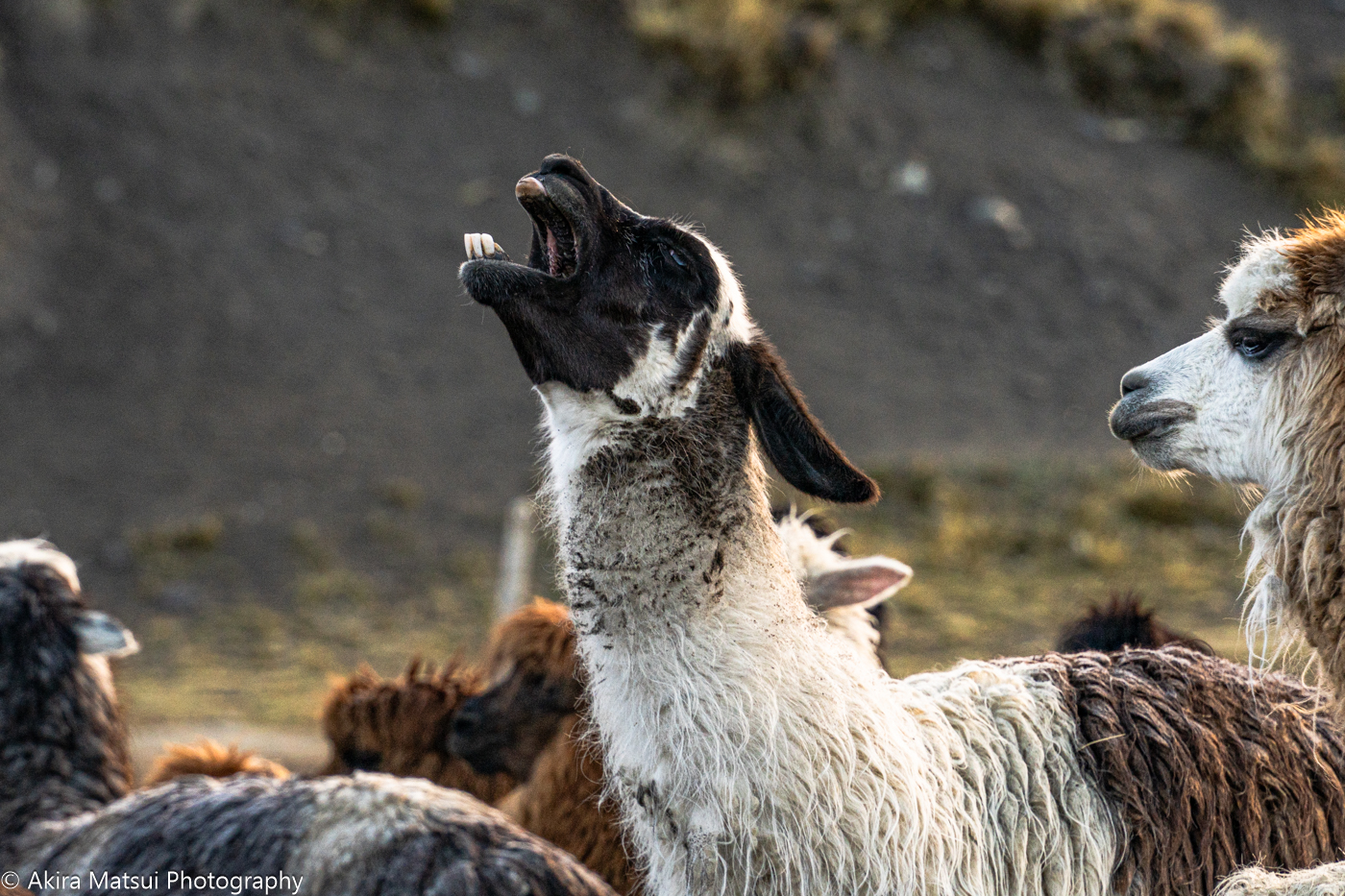
If the roots were pulled out entirely, the next sprouting would take a long time. The alpaca’s teeth have evolved to clip the grass without uprooting it. This structure is not only a tool for feeding, but also a mechanism that helps preserve the fragile vegetation of the highlands.
Behind their endearing expressions lies a long history of adapting to—and coexisting with—harsh natural conditions. The alpaca’s teeth are evidence of a life shaped by the environment of the Andean highlands, the Altiplano.
Altiplano — The Andean Highlands Where Alpacas and People Live Together
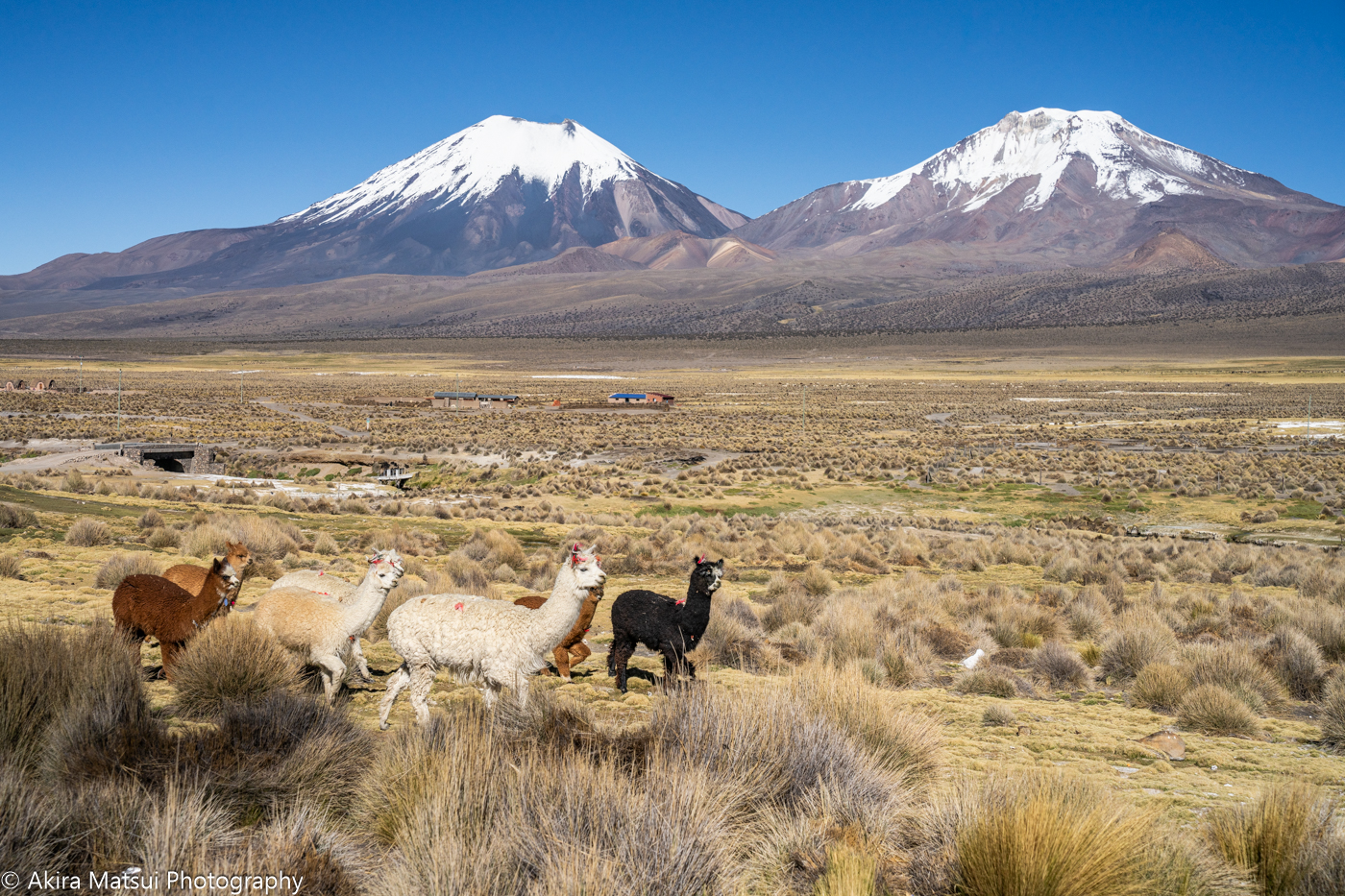
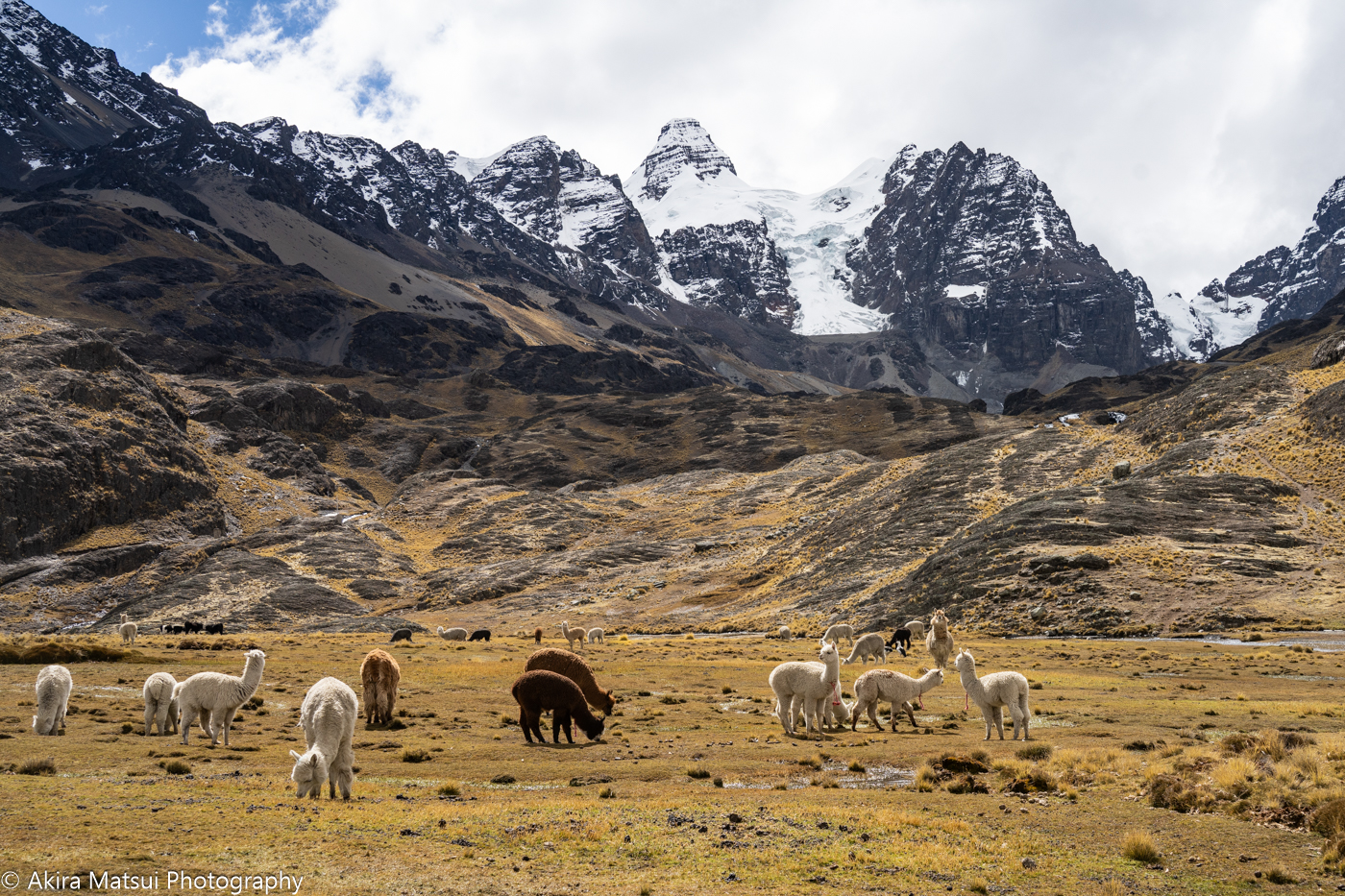
The high plateau that spreads across the central Andes of South America is known as the Altiplano (Andean Plateau). Extending primarily across western Bolivia and southern Peru, it reaches elevations of approximately 3,500 to 5,000 meters, making it one of the largest high-altitude plateaus in the world.
“Altiplano” means “high plain” in Spanish. True to its name, this vast expanse is relatively flat, stretching to the horizon while being surrounded by the towering peaks of the Andes—a distinctive geographical formation shaped by both uplift and time.
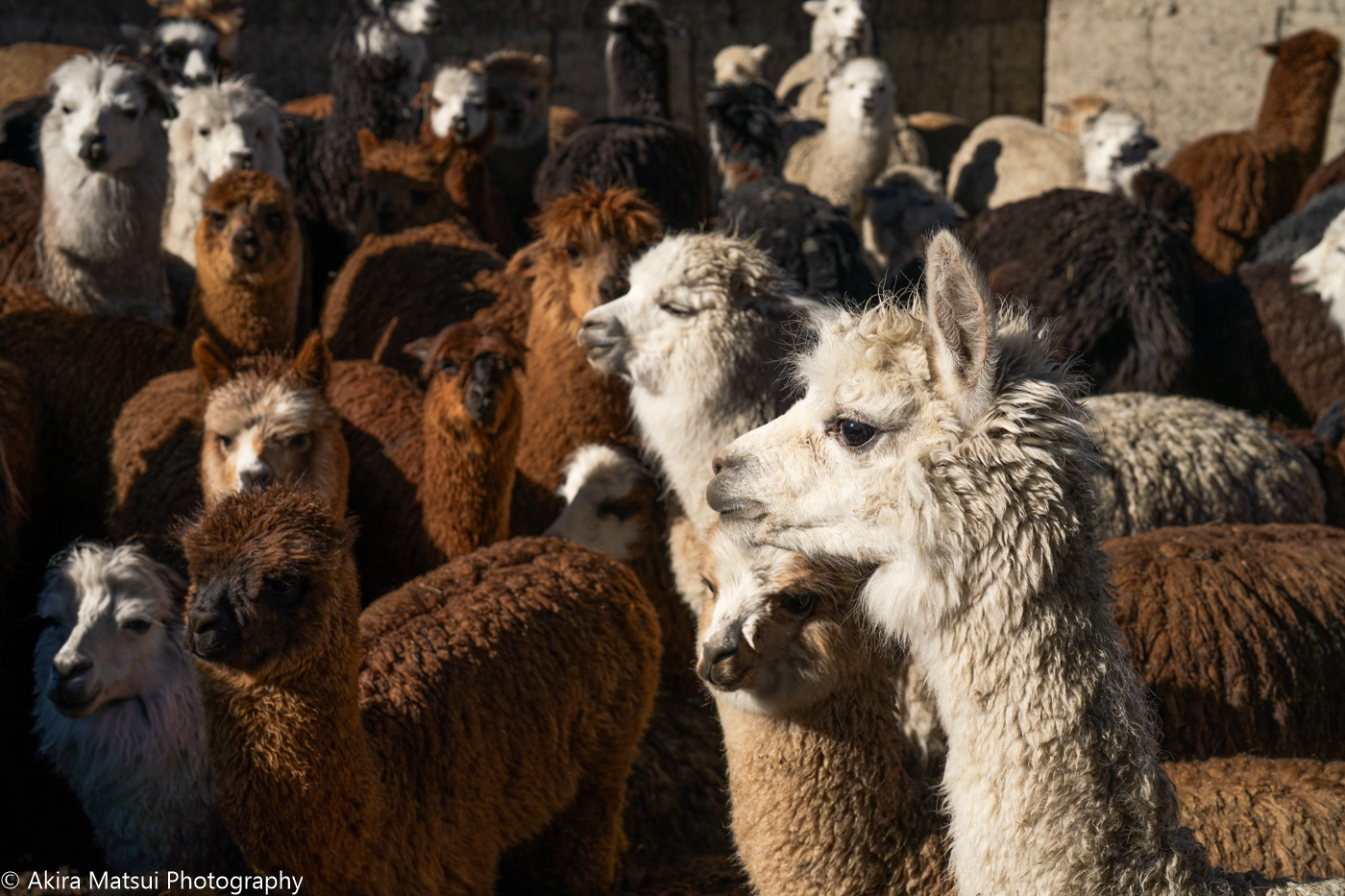
At around 4,000 meters above sea level, oxygen levels drop to roughly 60 percent of those at sea level. Days are exposed to intense ultraviolet radiation, while nights frequently fall below freezing. The climate is dry and windswept throughout the year, creating harsh conditions for agriculture. As a result, the number of species able to inhabit this region is limited.
Yet it is precisely this severity that has shaped the Altiplano’s unique ecosystem. Endless plains, wetlands, and salt flats define the landscape. Only plants and animals capable of adapting to these extreme conditions have survived. In an environment with little competition, those few resilient species have achieved a stable form of coexistence.
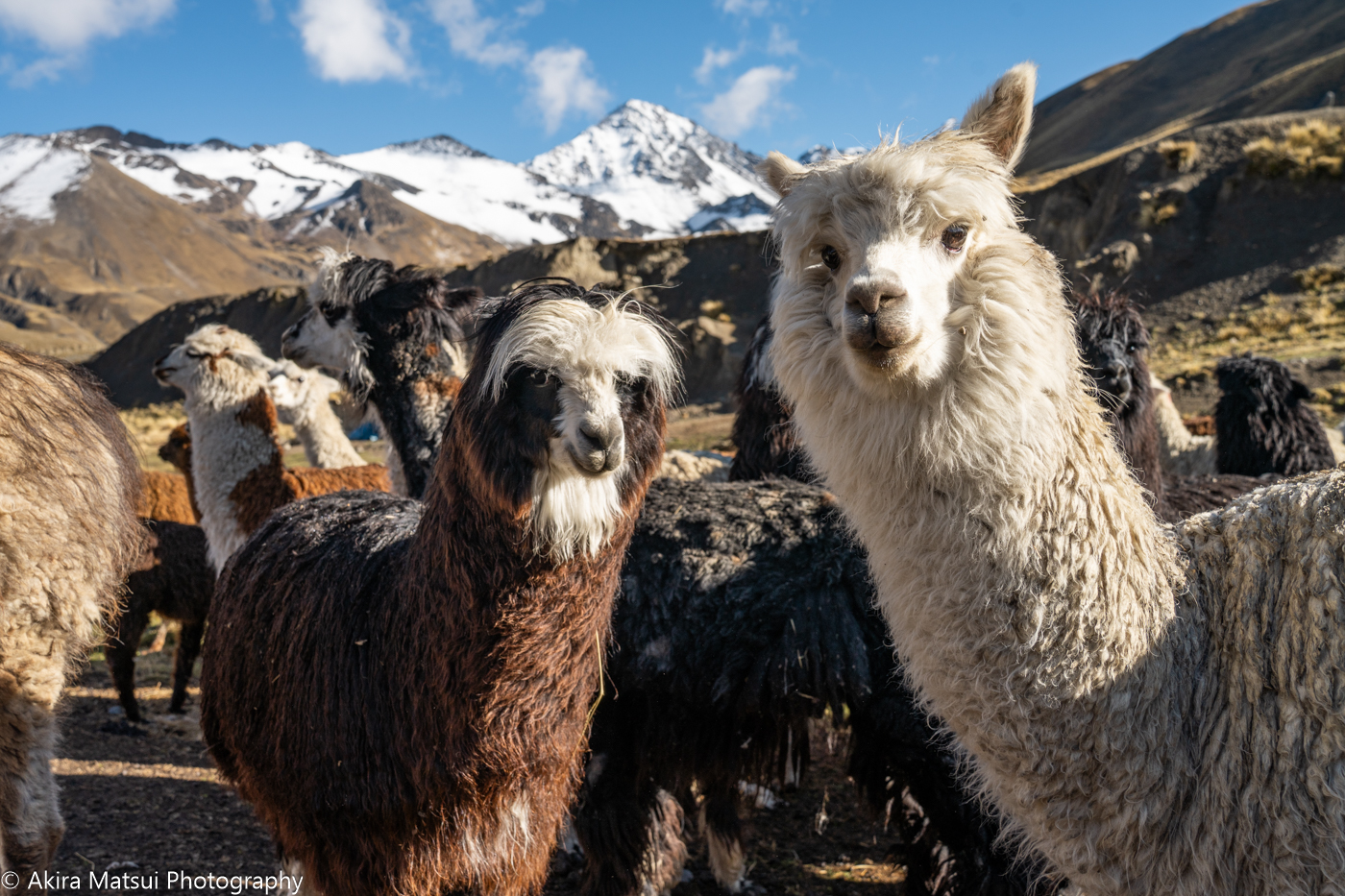
Camelids such as alpacas, llamas, and vicuñas are highly adapted to this high-altitude environment. Their dense, fiber-rich coats protect them from the cold, while efficient circulatory systems allow them to function in low-oxygen conditions.
In contrast to their gentle appearance, they are remarkably resilient animals. Their physical adaptations have enabled them not only to survive but to thrive for centuries on the Altiplano.
The Altiplano is not without predators. Pumas and foxes inhabit these highlands as well. Under such predation pressure, alpacas and llamas have found a way to survive alongside humans.
At night they rest safely within enclosures. During the day, herders keep the animals closely grouped and guard them with the help of watchdogs. Living with humans is not merely domestication—it is part of their survival strategy.
Within the vastness of the Altiplano, alpacas and llamas are most stably sustained at the foothills of glaciated mountains. Meltwater from glaciers nourishes the land below, fostering the growth of nutrient-rich grasses.
They cannot inhabit just any part of this semi-desert plateau. The presence of mountains is inseparable from the conditions that sustain their lives.
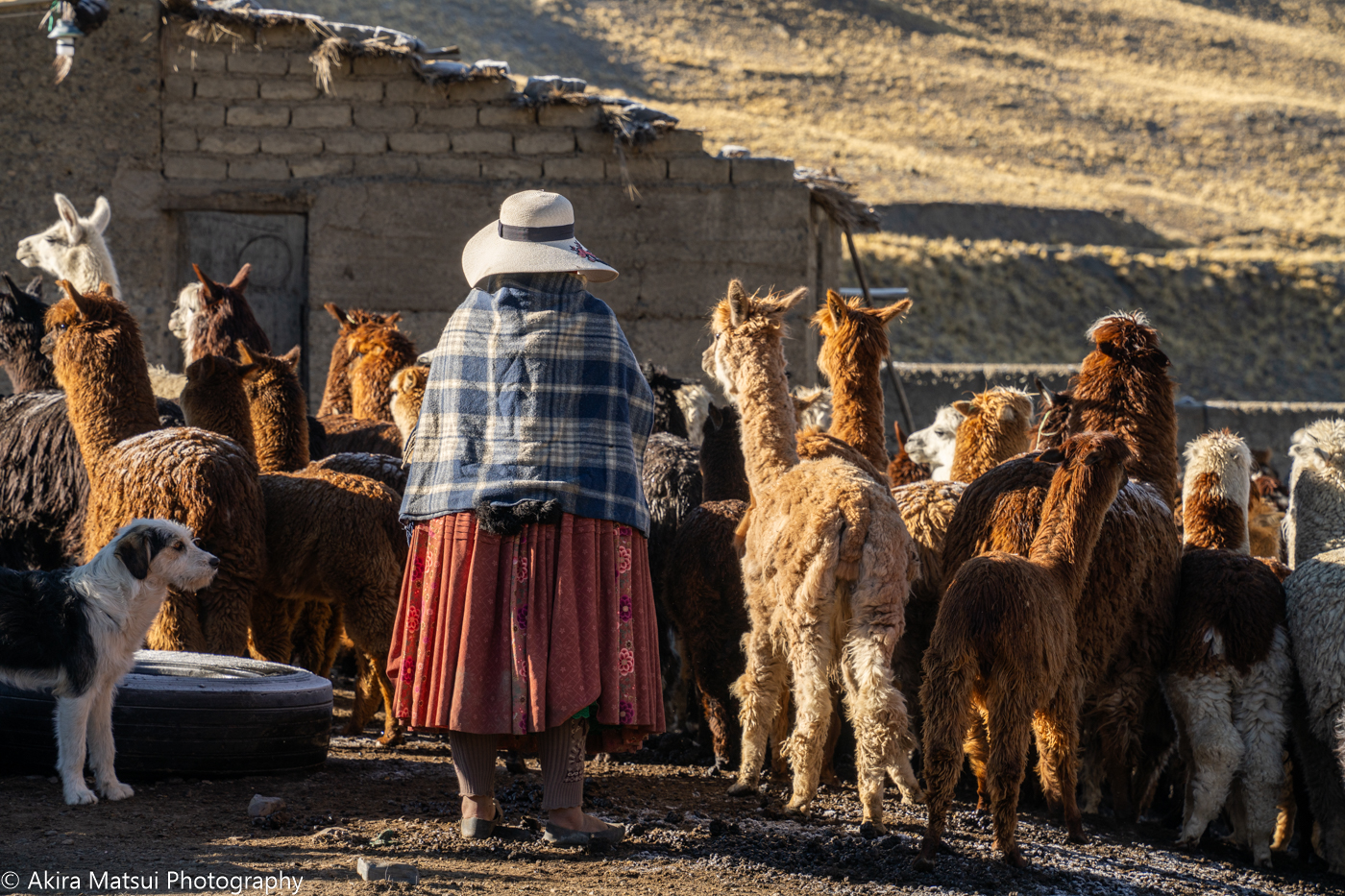
The Aymara and Quechua peoples, who live alongside alpacas and llamas, are connected to the lineage of the civilizations that later formed the Inca Empire. Long before the rise of the Inca, mountains were revered as sacred beings, comparable to the sun itself. Mountains brought water, nurtured grasslands, and sustained life.
Alpacas and llamas served as mediators between mountains and humans. They were not merely livestock, but living links between nature and society. This mythic worldview, while symbolic, reflects the very real structure of daily life in the Andes.
Mountain, human, and alpaca. When we become conscious of this triadic relationship, the landscape of the Andes reveals itself not simply as geography, but as a living space where culture and life converge.
関連ページ:
 Photobook “ALPACA – Living alongside the People of the Andes”
Fotolibro “ALPACA — Viviendo junto a los pueblos de los Andes”
Photobook “ALPACA – Living alongside the People of the Andes”
Fotolibro “ALPACA — Viviendo junto a los pueblos de los Andes”
 Akira Matsui Photography, Japan
 Photography Exhibition “Ubiquitous – Akira Matsui”
 Photography Exhibition “The Dynamic Earth: SOUTH AMERICA”
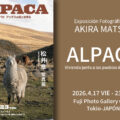 Exposición Fotografica de AKIRA MATSUI “ALPACA -Viviendo junto a los pueblos andinos”
AKIRA MATSUI fotografía, Japón
Exposición Fotografica de AKIRA MATSUI “ALPACA -Viviendo junto a los pueblos andinos”
AKIRA MATSUI fotografía, Japón
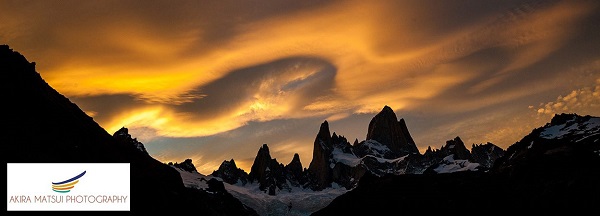 Art panel (framed photo) by custom made